









Mining Indaba 2026: ESG, Risk, and Value Addition in Africa – Insights, Meetings, and Strategic Reflections
Summary:
This report summarises key insights, stakeholder engagements, and strategic reflections from my participation at Mining Indaba 2026 in Cape Town. The event highlighted a clear shift in how ESG is being framed in the mining sector, from a compliance-and-reporting exercise toward a more grounded approach to material risk management, long-term value creation, and social licence to operate. Across high-level panels, technical sessions, and bilateral meetings with policymakers, industry, researchers, and civil society actors, several cross-cutting themes emerged: the centrality of infrastructure, energy systems, data, and financing in enabling value addition and beneficiation in Africa; the growing recognition that climate resilience is inseparable from community resilience; and the need to translate ESG, climate, and nature-related risks into decision-useful metrics for boards and investors. The report also documents targeted meetings with the FCDO, British High Commission economic advisor in Zambia, researchers, and legal practitioners, which opened pathways for future collaboration on ESG frameworks tailored to African contexts, with a focus on generating practical, on-the-ground impact beyond academic outputs.
1. Purpose and Context of the Trip
The purpose of attending Mining Indaba 2026 was to develop a grounded understanding of current debates shaping the mining sector in Africa, particularly around critical minerals, ESG, value addition, and industrial policy. The trip provided an opportunity to engage directly with policymakers, industry practitioners, researchers, and civil society actors, allowing for a more nuanced appreciation of how high-level frameworks translate into operational realities. It also enabled the exploration of potential research collaborations aligned with CCML’s focus on critical materials, ESG frameworks, and mineral value chains, while refining emerging research questions on the relevance and limitations of existing ESG frameworks in African mining contexts, with a particular focus on Zambia.
- Develop a grounded understanding of current debates around critical minerals, ESG, value addition, and industrial policy in African mining contexts.
- Engage with policymakers, industry practitioners, researchers, and civil society actors.
- Explore potential research collaborations aligned with CCML’s focus on critical materials, ESG frameworks, and value chains.
- Test and refine emerging research questions around ESG frameworks in African mining contexts, particularly in Zambia.
]2. Meetings & Interviews (Policy, Research & Practitioner Engagements)
Alongside Mining Indaba 2026, I pursued a series of targeted bilateral meetings and engagements with policymakers, researchers, and practitioners. These conversations complemented the conference sessions by offering practical insights into policy priorities, operational challenges, and opportunities for collaboration. While I engaged with many stakeholders, I highlight here only the most significant discussions. Collectively, these interactions helped position our research within ongoing policy and industry dialogues and identified concrete pathways for future collaboration, particularly around ESG frameworks, critical minerals platforms, and applied research on mining impacts.
2.1 Meeting with UK FCDO – Africa Strategy
Participants: Carl Hickson (FCDO), Gretel, Mehrnoosh
Arranged by: Lily and Laura Blizzard
Key Outcomes:
- Discussion of Gretel’s work on the “value addition myth.” Carl was highly interested in Gretel’s argument and engaged deeply in the results of this research.
- I shared reflections on the importance of ESG frameworks that are aligned with regional priorities in African contexts rather than imported wholesale from global models.
- FCDO showed strong interest in our research direction and how CCML’s work can inform policy thinking on value addition, industrialisation, and ESG.
2.2 Meeting with the Economic Advisor of the British High Commission in Zambia
Participants: Claire Hilton (Economic Advisor, BHC Zambia), Karla, Vivien, Mehrnoosh
Arranged by: Lily
Key Outcomes:
- Meeting was mainly focused on CM Africa platform
- I presented CCML’s work and my research on ESG in Zambia’s copper sector.
- Claire Hilton expressed interest and offered to connect me with:
- Mining companies
- Community representatives
- Government stakeholders in Zambia to support interviews and potential collaboration.
The meeting with Claire Hilton was mainly focused on the CM Africa Platform and the potential for regional partnerships to support its application across different African contexts. I found this opportunity to present CCML’s work and ongoing research on ESG in Zambia’s copper sector, as well as to outline future research plans aimed at identifying deficiencies in existing ESG frameworks and developing context-sensitive ESG modelling approaches.
2.3 Meeting with Theo Fiedler (Escience Associates, South Africa)
Focus: Mining innovation, energy, and environmental impact assessment
- Discussed potential collaboration between research institutions and applied research organisations.
- His work focuses on energy systems and environmental impacts of mining, with strong relevance to CCML’s agenda.
- Opportunity identified for collaboration on applied ESG and energy transition research in mining operations.
2.4 Engagement with UCT LEAD Programme lawyer
I was interviewed by a legal practitioner (Mr. Mikiyas Siyoum) participating in the University of Cape Town’s Leaders in Extractives and African Development (LEAD) Programme, as part of his group project on assessing the effectiveness of existing ESG frameworks in Africa. This exchange provided an opportunity to reflect on how ESG frameworks are applied in practice across African extractive sectors, from the perspective of emerging leaders working within industry, government, and civil society. The discussion focused on how ESG is understood beyond compliance and risk management, the limitations of globally standardised ESG frameworks when applied across diverse African contexts, and the need for more context-sensitive metrics and governance arrangements. The conversation highlighted a growing interest among emerging leaders in developing ESG approaches that are better aligned with African priorities, institutional realities, and community perspectives, and identified potential avenues for future collaboration with the UCT LEAD Programme.
Key questions raised included:
- How ESG should be understood beyond compliance and risk management
- The relevance of global versus Africa-specific ESG frameworks
- Practical metrics and indicators for measuring ESG effectiveness
- The case for a continental or model ESG framework tailored to African contexts
Key reflections shared:
- Existing ESG frameworks are often shaped primarily by corporate and regulatory perspectives, with limited integration of community and Indigenous viewpoints
- There are currently no mandatory global ESG frameworks applicable across the mining sector
- Independent, third-party monitoring is important for strengthening credibility and accountability
- There is a strong case for Africa-specific ESG models that remain compatible with international standards
Potential avenue for future collaboration:
Prof. Thabani Mlilo, Director, UCT LEAD Programme
(Minerals to Metals, Department of Chemical Engineering, University of Cape Town)
3. Key Sessions and Thematic Insights
This section synthesises the main themes emerging from plenary sessions, panels, and technical discussions at Mining Indaba 2026. Across the programme, there was a clear shift toward framing ESG, climate risk, value addition, and digital infrastructure as central to mining strategy, investment decisions, and long-term sector resilience. The sessions highlighted the growing gap between ambition and implementation, with repeated emphasis on the need to translate sustainability commitments into practical systems, decision tools, and institutional arrangements that work in complex African mining contexts.
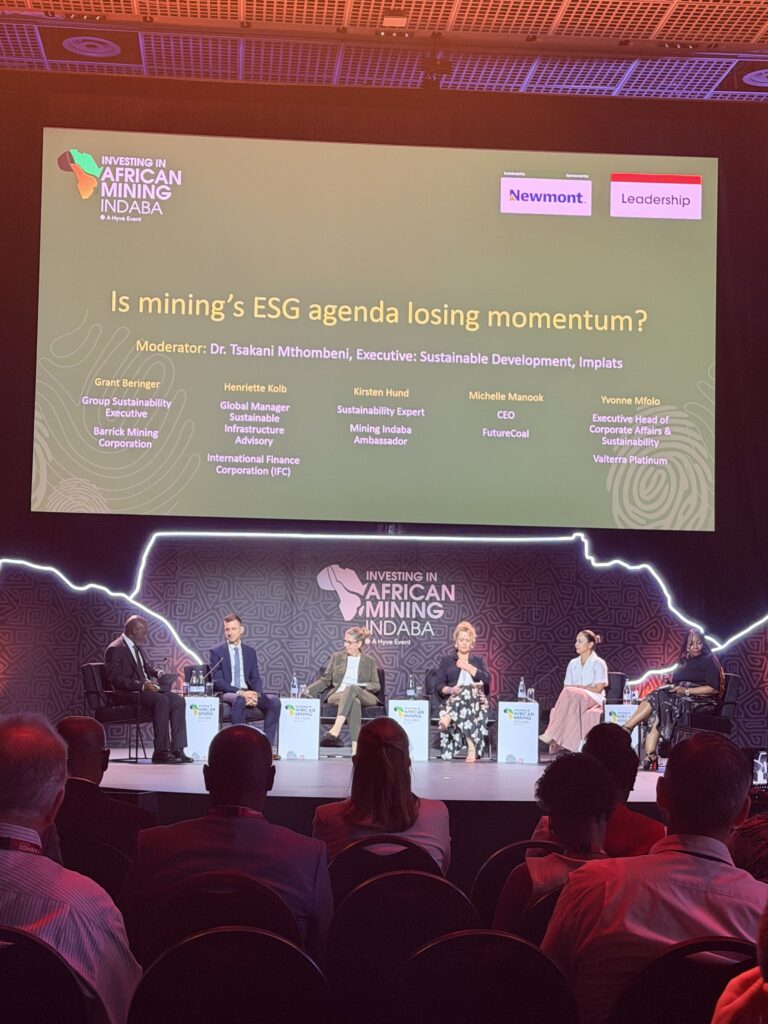
3.1 ESG, Climate Risk & Social Licence to Operate
- ESG is increasingly viewed as a core investment and strategy issue, not just sustainability reporting.
- Climate risk is a financial risk but remains difficult to quantify in board-level decision-making.
- Key risks of abandoning ESG:
- Loss of social licence to operate
- Reduced market access
- Investor disengagement
- Talent attraction challenges
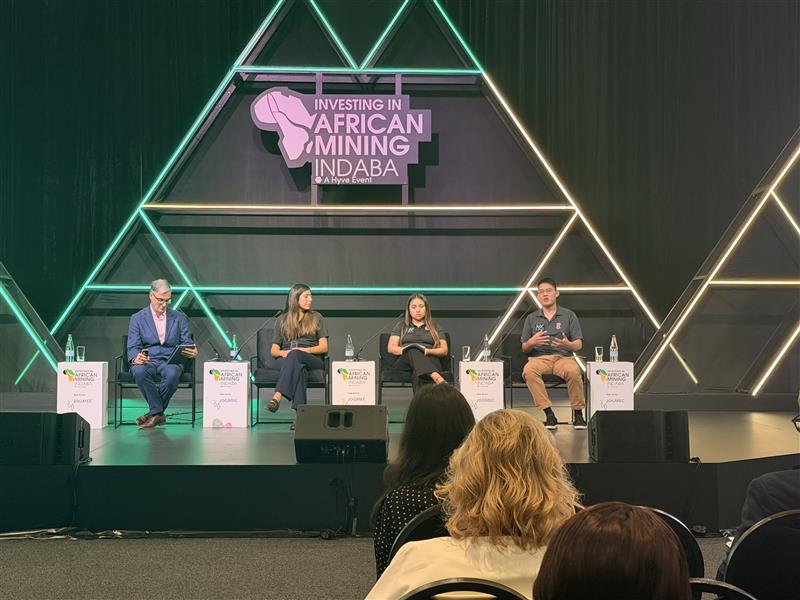
3.2 Mining Without Compromise – Technology & Energy Transition
- Electrification of mining fleets is technically feasible today.
- Key barriers: workforce training, operator confidence, infrastructure readiness.
- Renewables are increasingly cost-competitive but constrained by grid reliability in contexts such as DRC.
- Mine design must integrate zero-emissions pathways from the outset.
3.3 Value Addition, Beneficiation & Infrastructure
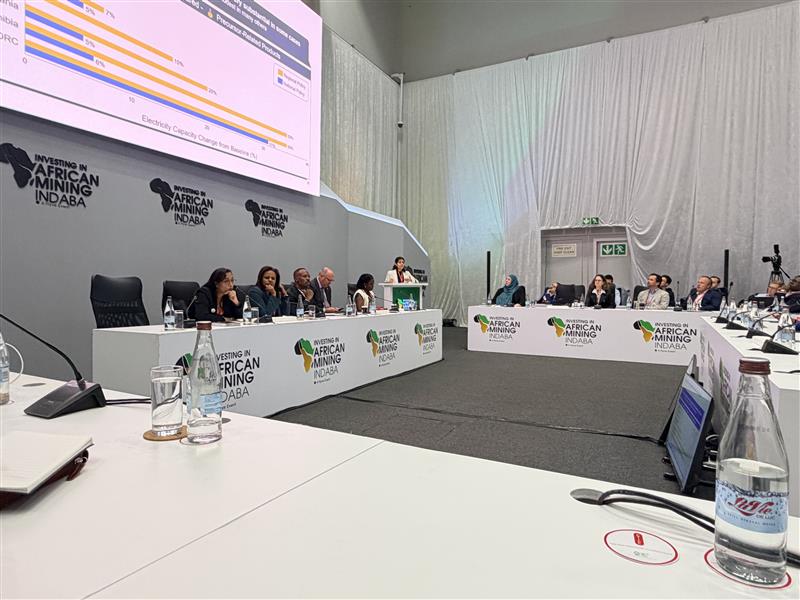
This section synthesises discussions on Africa’s ambition to move beyond extraction toward beneficiation, industrialisation, and long-term economic diversification. Karla and Vivien presented the CM Africa project first, and then the panelists discussed all the challenges in the way of Africa capturing more value from their mining. Key constraints highlighted include energy and power availability, infrastructure and logistics, data gaps, fragmented national approaches, skills shortages, and access to long-term finance. The sessions reinforced that value addition is not achievable without coordinated investments in power systems, transport infrastructure, and supportive industrial policy frameworks.
- No value addition without:
- Reliable power
- Transport infrastructure
- Logistics
- Data availability
- Skills
- Financing (especially local currency)
- Beneficiation strategies fail if energy systems and infrastructure are not addressed first.
3.4 Due Diligence, Traceability & Digital Infrastructure
- ESG and due diligence must move from paper compliance to accountability and outcomes.
- Traceability systems should be treated as shared public infrastructure.
- ASM inclusion is essential; exclusion undermines social legitimacy.
- Interoperability between data systems is critical to avoid fragmentation.
3.5 Communities, Resettlement & Fairness
- Resettlement must be treated as a long-term development issue, not a compliance box.
- Fairness requires:
- Meaningful consultation
- Independent evaluation
- Long-term monitoring
- Community participation
- Governments must share responsibility with companies for social outcomes.
4. Strategic Reflections for My Research
- ESG frameworks are currently insufficiently tailored to African governance, cultural, and institutional contexts.
- There is strong demand for contextualised ESG modelling that integrates:
- Community perspectives
- Climate and nature risk
- Infrastructure constraints
- Political economy realities
- Future research should move beyond reporting toward decision-relevant ESG tools that link risk, value creation, and community outcomes.
The discussions reinforced that existing ESG frameworks are often insufficiently tailored to African governance, cultural, and institutional contexts, limiting their effectiveness on the ground. There is strong demand for more contextualised ESG modelling that integrates community perspectives, climate and nature-related risks, infrastructure constraints, and political economy dynamics, and for research that moves beyond reporting toward decision-relevant tools capable of informing investment and policy choices.
5. Key Outcomes & Next Steps
Key outcomes include strengthened policy engagement with FCDO and the British High Commission in Zambia, identification of potential research collaborations in South Africa and Zambia, and emerging pathways for collaboration with the UCT and Wits. The next steps focus on translating these engagements into concrete research partnerships, follow-up meetings with stakeholders in Zambia, and the development of an ESG research proposal centred on African-context frameworks and mineral value-add modelling, to generate applied, on-the-ground impact beyond academic outputs.