






Global installed capacity of wind power reached 1,136 GW in 2024 (representing 8.1% of total electricity generation), and continued installation of new capacity is needed to provide renewable energy. Effective end-of-life (EOL) management strategies are, therefore, needed to recover materials from wind turbines.
This Review assesses current and emerging EOL practices, comparing the environmental and economic trade-offs across mechanical, thermal and chemical recycling technologies. Wind turbines are built from a range of materials, including structural metals, concrete, composites and magnetic materials, which have distinct recovery pathways and barriers.
Structural metal recycling is well developed and used commercially, but concrete recycling is more nascent and not competitive. Near-term scalable composite recycling technologies — including mechanical recycling and cement kiln co-processing — cannot recover the structural strengths of the original composite, but more advanced technologies — such as thermal fibre recovery and solvolysis — face energy and economic barriers to wide-scale deployment.
Magnet recycling can either preserve material in its intact form through shorter loop processes or recover valuable rare-earth elements through longer loop processes. The size of the magnets could enable direct reuse of magnets, but it is complicated by changing designs. Further development of recycling and reuse pathways should be complemented by design that enables EOL management and materials circularity.
To read the full paper by Refficiency’s Jonathan Cullen, Fanran Meng and other colleagues, in Nature Reviews Clean Technology, click here.
Metals are essential to the global economy, yet traditional criticality assessments, often based solely on the geographic concentration of mining production, overlook the corporate control dimension of risk. Here, we analysed whether ownership structures affect trade patterns in critical minerals and examined how production and corporate control diverged from 2000 to 2022.
We developed a comprehensive country-level dataset using S&P Capital IQ Pro for 12 key metals and metal ores, calculated Herfindahl–Hirschman indices (HHI) for production and ownership, and statistically tested the relationship between foreign mine ownership and international trade flows using logistic and fixed-effects regressions.
Finally, we built scenarios for production and ownership in 2030 to match demand estimates from the International Energy Agency (IEA). Results showed only 2%–14% of global ore trade value overlaping with existing foreign ownership ties and no statistically significant relationship between foreign mine ownership and trade flows.
Additionally, clear divergences emerged between ownership and production concentration: cobalt production was highly geographically concentrated (HHI of 4602 in 2022) but had dispersed corporate ownership (HHI of 1985), and high-income countries frequently held substantial ownership stakes despite declining shares of actual production.
Projected scenarios indicated continued shifts, notably reduced cobalt and lithium production shares in traditional producer countries, offset by growing Canadian and Australian ownership. Although market dynamics do not appear to be influenced by ownership structures today, corporate control remains a potential lever for supply chain disruption. This underscores the need to incorporate ownership into criticality assessments for a more comprehensive understanding of supply risks.
To read the full paper by Refficiency’s: Baptiste Andrieu, Mehrnoosh Heydari and Jonathan Cullen and other colleagues, in Resources, Conservation and Recycling, click here.
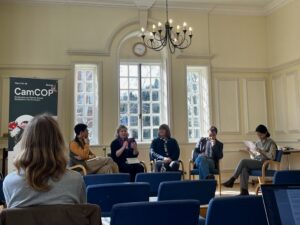
On September 22nd, we had the pleasure of hosting the CCG Critical Minerals Research Showcase here in Cambridge. The event brought together a diverse group of academics, researchers, and government representatives to explore current research and discuss the future of critical minerals.
There were four sessions chaired by Prof. Jonathan Cullen, Prof. Adam Hawkes, and Dr André Cabrera Serrenho. In each session, three speakers, from varying research backgrounds, gave presentations on their latest critical mineral (CM) research to a brilliant in-person audience, as well as those joining us online via livestream.
Session 1: Critical Minerals for the Low-Carbon Transition

Chaired by Prof. Jonathan Cullen, the first session explored how CMs underpin emerging technologies and the global transition to a low-carbon future.
Dr Philip Mitchell presented Stock-Flow Modelling of UK Lithium Requirements, examining the UK’s growing lithium requirements and how we can maintain UK living standards while reducing emissions. Then, Dr Sam Stephenson discussed global critical mineral demand projections in Our Critical Future – Modelling Future CM Demand in the UK and Globally and focused on the role critical minerals play in a decarbonised or low-carbon future: how the demand for critical minerals is subject to the type of future we enter into. Lastly, Prof. Matthew Davies presented Next Generation Solar – Transforming Energy Access, Critical Raw Materials and Design for Circularity, explaining how Next Generation Solar has the capacity to reduce waste, address supply chain concerns, utilise local materials and equipment, and enable local remanufacturing.
Session 2: Mapping Supply Chains: from Mine to Market

Session 2 was led by Prof. Adam Hawkes and shifted focus towards mapping critical mineral supply chains across infrastructure, logistics, and transport systems.
Dr Matteo Craglia presented Critical Mineral Demands – What Makes a Difference? providing an overview of key CM demand drivers and the changes to demand we can expect in the future. He spoke on the importance of realistic time frames when looking at new technologies and the differences between what we can do to facilitate CM demand now versus what may be feasible in 10-20 year time. Benjamin Adams followed with Mapping Supply Chains to Understand Bottlenecks, looking at the importance of facility-level supply chain models (specifically for lithium) and identifying different methods and particular challenges involved in such mapping. Finally, Dr Raghav Pant’s Transport Network Modelling of Critical Mineral Supply Chains offered a detailed look at supply chains in the transport sector and the use and demands for critical minerals particularly in relation to electric vehicles. He identified areas of risk and proposed research questions aimed at mitigating them.
Session 3: Environmental & Social Impacts, Policy & Governance

After lunch, Dr André Cabrera Serrenho resumed the showcase with Session 3 focusing on the global implications of CMs in development, governance, and sustainability.
Dr Alexey Noskov began with Integrating WebGIS Dashboards and Risk Factor Analysis – Insights from Displaced People and Critical Mineral Research, presenting on CCG’s Critical Mineral Dashboard (CMD) and Open GIS Software for Resilient Supply Chains. He explained how the CMD was built to make the Open GIS data both accessible and usable, revealing risks in supply chains and supporting future decision making in the critical mineral sector. Dr Brunilde Verrier then discussed Governance and Equity in CM Supply Chains which revealed how effective governance of CM supply chains must balance the growing demand for CMs with ethical sourcing, labour transparency and social equity in order to build resilient, fair and accurate supply chains. The session concluded with Gretel Cuevas Verdin’s Enhancing Value – Strategies for Effective Mineral Value Chain Governance, where she discussed the disconnect between the narrative of critical mineral opportunity and the reality that the critical mineral value chain operates under a captive governance that prevents many mineral rich countries from harnessing value addition.
Session 4: Risk Assessment & Mitigation Strategies

The final session of the day, chaired once again by Prof. Jonathan Cullen, looked towards the future of critical mineral systems with a focus on risk, resilience, and long-term planning. Speakers reflected on previous research, identified gaps in current critical mineral research and presented future strategies and focal areas.
Dr Mehrnoosh Heydari’s Building Resilience in the Critical Minerals Supply Chains explored the rise in demand for critical minerals, the geographical challenges that hinder the meeting of demands, the outcomes of CCG’s Systematic Review of Resilience in the CM Supply Chains, and the ESG (Environmental, Social and Governance) driven operational practices that could be used to create a resilient, responsive and sustainable supply chain. Mulako Mukelabai shared, Zambia’s Ambitious Mining Targets – Is it Possible Given Existing Infrastructure Constraints? giving an overview of the challenges Zambia faces in trying to implement sustainable development and the proposed methods aimed at counteracting them. Closing the session, Dr Baptiste Andrieu presented Ten Years On – Are Raw Material Criticality Assessments Making More Sense? Based on a recent publication by some members of Refficiency and other authors, he discussed Criticality Assessments in the context of risk theory. Explaining the oversights of previous publications (pre 2016), he revealed both the positive changes in recent research and the flaws that have continued to hinder supply chain mapping, proposing future research requirements that aim to solve these problems.
Following each session, the chairs initiated panel discussions, leading with their own questions and then opening up to the audience. These conversations allowed the audience to consider how the presented research might integrate with their respective fields and gave speakers the opportunity to respond to new perspectives.


It was particularly exciting to hear from newer members of the Resource Efficiency Collective. Special recognition goes to Benjamin Adams, who delivered his first presentation as part of the group, speaking on supply chain modelling.
✨Thank you to everyone who helped organise this amazing day, we look forward to coming together again!✨
See a list of relevant publications below:
As the global economy shifts towards decarbonization, the demand for critical minerals (CMs), essential to low-carbon energy technologies, continues to rise. Yet, CM supply chains remain exposed to serious risks, including geopolitical tensions, resource depletion, and environmental disruptions. This review provides a novel, multidimensional synthesis of CM supply chain resilience by reviewing 327 peer-reviewed studies through a systematic PRISMA framework, enhanced with large language models (LLMs). The review focuses on potential disruptions and mitigation strategies across the entire CM supply chain, from mining and processing ores (upstream), through product manufacturing (midstream), to end-use sectors (downstream).
Our analysis reveals four key insights which are poorly addressed in the literature. First, an imbalance is revealed in the literature, where resilience strategies mainly target upstream disruptions, such as geopolitical location of facilities and processing constraints, while midstream and downstream vulnerabilities remain underexplored, including demand volatility, refining and manufacturing bottlenecks, and logistical fragilities.
Second, a significant underrepresentation of technological innovations is identified, such as advanced mining equipment and process routes, across exploration, mining, and refining, despite their proven capacity to mitigate structural supply constraints and reduce environmental risk.
Third, circular economy concepts, such as recycling and recovery, while widely promoted as mitigation strategies, face systemic and technical barriers that compromise their effectiveness and deployment in practice.
Fourth, a critical conceptual gap is uncovered, showing that few studies systematically apply classical risk theory to link hazards, exposure, and vulnerability, limiting the predictive and operational value of current resilience assessments. By addressing these strategic blind spots, our review reframes CM resilience as a system-level challenge that requires integrated innovation, targeted policy, and cross-stage coordination over the entire value chain. It equips decision-makers with actionable insights to anticipate, absorb, and adapt to future disruptions, ensuring that critical mineral supply chains remain resilient in the face of mounting pressure from global energy transitions.
Click here to read the full paper by Mehrnoosh Heydari, Philip Mitchell, Luke Cullen, Baptiste Andrieu, André Cabrera Serrenho and Jonathan Cullen.
Photo by Paul-Alain Hunt on Unsplash
In early July 2025, I joined my colleagues on a trip to Singapore and Vietnam, a journey filled with insightful discussions, collaboration, and shared learning on sustainability, critical minerals, and industrial ecology.
ISIE 2025 – Advancing Industrial Ecology for a Sustainable Future
The journey began in Singapore, where I attended the International Society for Industrial Ecology (ISIE) 2025 Conference, hosted by the National University of Singapore (NUS). The ISIE conference is one of the world’s leading platforms for researchers and practitioners advancing the science and practice of sustainable industrial systems.
Over several days, the sessions covered an impressive range of topics, from circular economy transitions, resilient supply chains, and material flow analysis, to energy systems modelling and machine learning applications in sustainability.


It was inspiring to listen to global experts discussing how industrial ecology can inform real-world decisions. I particularly enjoyed sessions that connected critical minerals and resilience thinking, themes closely related to my research.
During the poster session, I presented my work titled “Critical Minerals: Critical for Whom?”, which explores the governance, resilience, and stakeholders’ dimensions of critical mineral supply chains. The feedback and conversations that followed were incredibly enriching, highlighting the growing recognition of social and environmental dimensions in discussions about resource security.

We also took some time to explore the city, visiting Singapore’s iconic landmarks, experiencing its remarkable urban nature, tasting authentic local cuisine, and engaging in insightful conversations about the region’s approach to technological sustainability.


Vietnam – Building Partnerships for Climate Compatible Growth
Following the conference, I travelled to Vietnam as part of the Climate Compatible Growth (CCG) programme. Together with colleagues from the University of Cambridge, we met with national partners and key stakeholders to discuss the potential for future collaborations.
The meetings brought together representatives from government agencies, research institutes, and industry partners to explore how data-driven analysis can support low-carbon planning and resource-efficient growth. We discussed our ongoing work with the goal of supporting circular economy in Vietnam for sustainable development.


The exchanges were highly constructive, reinforcing the importance of interdisciplinary collaboration in addressing material intensity and CE in developing economies. Our Vietnamese partners shared valuable insights on national priorities and data availability, which will help refine our modelling framework and ensure local relevance.
Beyond the formal discussions, the visit was also an opportunity to strengthen professional relationships and enjoy Vietnam’s warm hospitality and vibrant culture. Shared meals, informal conversations, and mutual curiosity created a wonderful sense of connection and common purpose.
Exploring Vietnam’s Nature and Culture
After the meetings, we took some time to explore Vietnam’s rich natural and cultural heritage. The lush landscapes, intricate temples, and lively markets offered a glimpse into the country’s deep-rooted traditions and rapid modern transformation. From peaceful lakesides to the flavourful local cuisine, every experience reflected the balance between heritage and progress, a theme that resonates deeply with our work on sustainable transitions.


Looking Ahead
This trip was a powerful reminder of how collaboration across borders and disciplines drives innovation and real impact. The insights gathered from both ISIE 2025, and the CCG Vietnam meetings will directly contribute to our ongoing work on resilience in critical mineral supply chains and sustainable material transitions.
I’m deeply grateful to all colleagues, organisers, and partners in Singapore and Vietnam for making this journey so memorable and productive.
Cement production is a major contributor to global emissions, representing 6% of CO2 energy-related emissions. The existing literature evaluates several interventions in production pathways to reduce energy consumption and carbon emissions. However, a knowledge gap exists regarding the influence of raw material chemical composition on the energy and carbon emissions requirements for clinker production. To address this gap, we have developed an open-source model that estimates the minimum energy requirements for clinker production based on 3738 raw material compositions.
The model considers the chemical composition of the input materials and the relevant chemical reactions to calculate theoretical and practical minimum energy requirements, where the theoretical minimum includes the enthalpy of reactions, and the practical minimum also accounts for the energy needed to heat the raw meal. Our findings show that the theoretical minimum energy required for clinker production ranges from 1.60 MJ kg−1 to 1.76 MJ kg−1, while practical minimum energy requirements range between 2.95 MJ kg−1 to 3.11 MJ kg−1. Potential improvements could reduce practical minimums to a range of 1.85 MJ kg−1 to 2.5 MJ kg−1. This study establishes a baseline for potential energy savings and emissions reduction by targeting a more resource-efficient clinker composition.
To read the full paper by Natanael Bolson and Jonathan Cullen in Environmental Research Infrastructure and Sustainability, click here.
The current pace of adoption of energy efficiency retrofit measures for UK homes is not at the scale required. Innovative retrofit business models, including one-stop-shops and energy service business models, are emerging to organise the supply chain and accelerate retrofit delivery. Meanwhile in the wider buildings sector, circular economy strategies and circular business models including material passports, natural fibre insulation, and off-site manufacturing are beginning to improve resource efficiency and lower whole life carbon emissions.
This paper combines these often separately studied fields of business model innovation through 25 expert interviews that provide a systems level overview of the barriers, enablers, and opportunities for scaling-up innovative and circular business models in the UK domestic retrofit sector. This interview series addresses a research gap in the academic literature on circular economy strategies for existing domestic buildings by comparing the differences and overlaps in barriers and enablers between different circular business models and including innovative retrofit business models in the discussion on circularity.
The results reveal opportunities for inter-relationships between the business models and describe how combining business model features could accelerate the adoption of circular economy strategies on the back of attractive customer value propositions. The long-term customer relationships offered by the innovative retrofit business models lay the foundations for the design of circular supply chains and off-site manufacturing is identified as a central business model to unlock potential collaboration opportunities.
To read the full paper by Ana Boskovic and Jonathan Cullen in Journal of Cleaner Production, click here.
Former member of the Resource Efficiency Collective, Dr Fanran Meng, has won the Royal Society of Chemistry’s 2025 Environment, Sustainability and Energy Early Career Prize.
Whilst at the University of Cambridge, Fanran worked on the C-THRU research project; a multimillion dollar international research project which aimed to deliver carbon clarity for the global petrochemical sector. He authored papers such as ‘Replacing Plastics with Alternatives Is Worse for Greenhouse Gas Emissions in Most Cases‘, published in ES&T, and ‘Reducing uncertainties in greenhouse gas emissions from chemical production‘ in Nature Chemical Engineering.
Nowadays, Fanran is lecturer of Sustainable Engineering at the University of Sheffield and leads his own research group.
‘Fanran’s research helps companies and policymakers understand how to reduce the environmental impact of products like plastics, chemicals and batteries. He uses advanced models such as life cycle assessment to track where emissions come from and which solutions – such as better recycling or greener technologies – can reduce waste and pollution. This work supports global action on climate change and helps industries make smarter, more sustainable decisions.’1